IPA CIS Proposes Developing Common Definition of “Electoral Security”
13 November 2026
CIS Member Nations attach priority importance to ensuring the security of electoral processes, which guarantee the continuity of public authorities and the stability of the constitutional order. In this regard, it is important to develop a common approach to defining the concept of “electoral security” and establishing the legal framework and enforcement mechanisms required to ensure it.
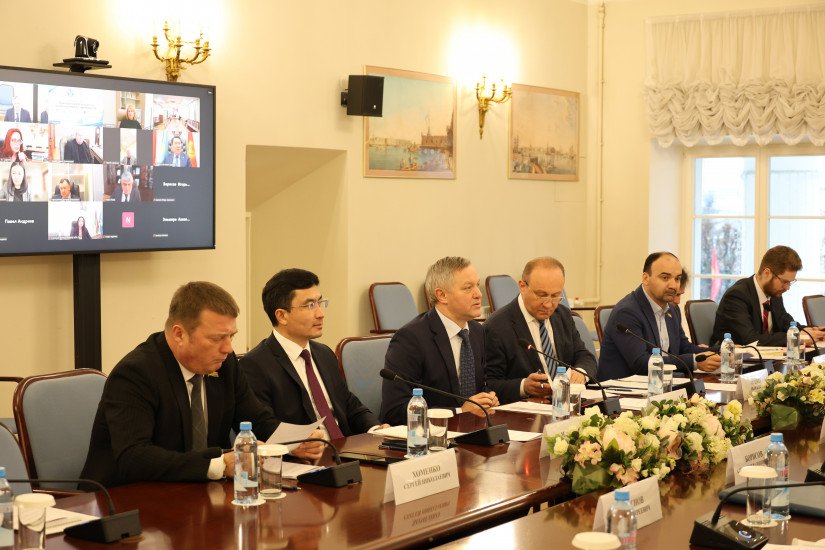
Secretary General of the IPA CIS Council Dmitriy Kobitskiy stated this at the round table “Electoral Security: Challenges in the Modern World”, held at the IPA CIS headquarters.
“The IPA CIS aims to develop a common conceptual framework as a basis for subsequently establishing strategies for cooperation among CIS Member Nations in this area,” he noted.
The Secretariat of the IPA CIS Council proposed that the issue of electoral security in the Commonwealth countries be considered at a meeting of the Advisory Board of Heads of Electoral Bodies of the CIS Member Nations, scheduled to take place in Bishkek in January 2027.
Deputy Head of the IPA CIS Council Secretariat – Director of the International Institute for Monitoring the Democracy Development, Parliamentarianism and Suffrage Protection of Citizens of IPA CIS Member Nations (IPA CIS IIMDD), Doctor of Law, Professor Ivan Mushket noted in his presentation that attempts to interfere in the electoral processes of other countries have become a persistent trend in Western political practice. Such attempts range from publicly promoting specific candidates and financing “civil activists” to cyberattacks on electoral infrastructure and deliberate efforts to discredit government institutions.
“Moreover, international election observation, which is intended to ensure transparency rather than manipulation, is also being used for such destructive purposes,” the Director of the IPA CIS IIMDD stressed.
Under these circumstances, protecting electoral procedures is becoming not only a domestic political concern but also a matter of national importance, requiring a comprehensive approach and the development of common international standards.
Existing CIS documents – the 2002 Chisinau Convention, the IPA CIS Declaration on the Principles of International Election Observation and the 2022 Model Law on International Election Observation – provide a conceptual basis but do not offer a clear definition of “electoral security”.
At the same time, research indicates that electoral security extends far beyond the protection of electoral infrastructure. It represents a comprehensive state of protection of the electoral system, election participants, government institutions and civil society, essential for ensuring the legitimacy of public authorities and maintaining public trust in democratic procedures.
“This is why the IPA CIS is committed to developing a common conceptual framework and establishing a legal framework in the field of electoral security”, Ivan Mushket emphasised.
Developing a unified definition, identifying the functional components of electoral security and establishing enforcement mechanisms will be important steps towards creating an integrated system for protecting electoral processes across the Commonwealth, the presentation noted.
The round table discussion addressed the meaning of “electoral security” and the role that international election observation should play in ensuring it, along with other related issues.
The discussion brought together representatives of the parliaments and electoral management bodies of the CIS countries, CIS sectoral cooperation bodies, academics and experts.