
Harmonization of Counter-Terrorism Legislation Discussed in Moscow
09 June 2026
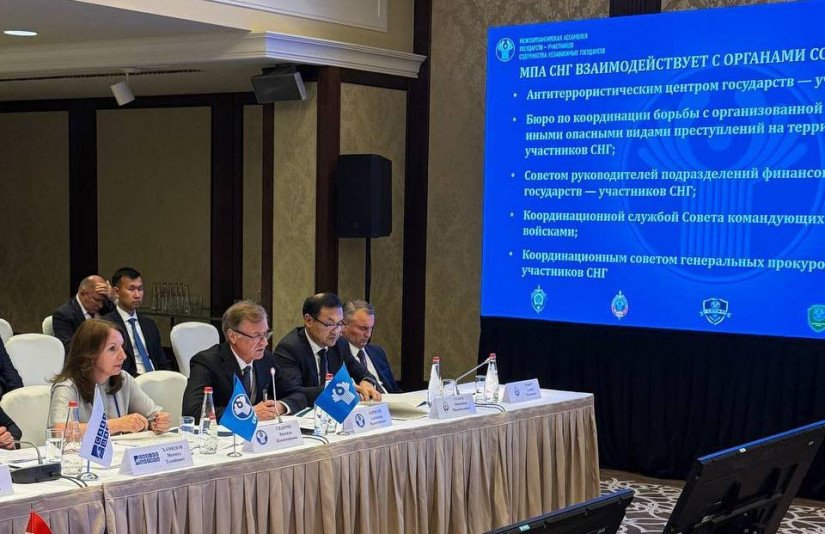
On 9 June, Moscow hosted the 19th Meeting of Heads of Counter-Terrorism Units of the competent authorities of the CIS Member Nations and heads of national bodies coordinating counter-terrorism and countering extremism efforts.
The Interparliamentary Assembly was represented by Secretary of the IPA CIS Permanent Commission on Defense and Security issues, Joint Commission on the Harmonization of Legislation in the field of security and countering new challenges and threats Alexander Borisov and Secretary of the IPA CIS Permanent Commission on Political Issues and International Cooperation, Head of the Department for International Relations of the IPA CIS Council Secretariat Maksimillian Selyutin.
In his address, Alexander Borisov noted that the IPA CIS develops model legislation to address legal gaps, including issues related to the terrorist use of artificial intelligence and cryptocurrency circulation. To date, the Assembly has adopted 132 model acts covering counter-terrorism and countering extremism, defense, mobilization, border security, information security, and emerging technologies. An analysis for 2023–2025 demonstrated their extensive use in Armenia, Belarus, and Kazakhstan.
He emphasized that CIS Member Nations adapt these model acts to their national legal systems and priorities, highlighting their advisory nature and the importance of continued dialogue. Work is currently underway on draft framework laws concerning nuclear energy security and the technological independence of critical information infrastructure.
Alexander Borisov also noted that the Assembly actively cooperates with CIS bodies and international organizations. In May, it co-organized events on deradicalization and the social reintegration of individuals involved in terrorist organizations, as well as on legislative regulation of the use of artificial intelligence for counter-terrorism purposes. He concluded that harmonized legislation and close cooperation among CIS countries are essential for effectively addressing emerging security threats.