Development of Agritourism in CIS: Innovation, Legislation and Regional Cooperation
13 April 2026
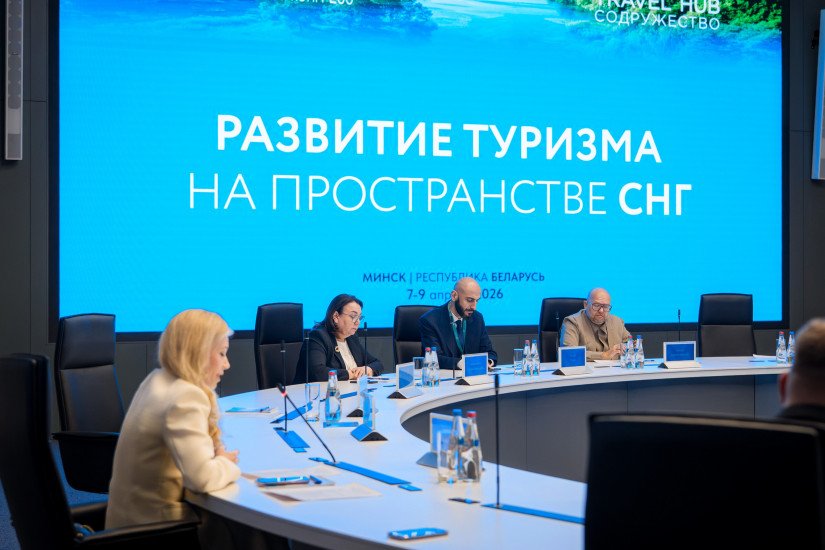
The "Agritourism in the CIS Space" session was recently held as part of the International Tourism Forum Travel Hub "Commonwealth". Organized in partnership with the Ministry of Agriculture of the Russian Federation and hosted by the CIS Interparliamentary Assembly, the event brought together regulatory officials, successful project founders, and industry experts. The primary objective of the discussion was to transition from isolated local initiatives to a comprehensive state-supported strategy for rural tourism, alongside building a permanent professional community for cross-border knowledge sharing.
Participants agreed that expanding this sector could drastically improve the quality of life in rural areas. Deputy of the Majlisi Namoyandagon of the Majlisi Oli of the Republic of Tajikistan, Member of the Committee on Agrarian Issues, Water and Land Resources Nematullo Kholboyzoda highlighted the rising popularity of guided tours to apricot orchards and vineyards, adding that future plans include attracting tourists to cotton harvesting. This is a vital development for Tajikistan, where approximately 70% of the population resides in rural regions. Meanwhile, from the National Tourism Agency of Belarus Denis Bezhok stated that the country aims to increase tourism's GDP contribution to 4.5% by 2030. To achieve this, the government is actively reforming its approach to regulating farmsteads, which currently number over 1,400 and have seen a 77% year-over-year increase in visitors from Russia.
Financial and institutional support mechanisms for farmers were also key topics of discussion. The Head of the Department for the Development of Small Agrobusiness in the Russian Ministry of Agriculture Renata Bibarsova introduced a new federal project that classifies rural tourism as a distinct sector eligible for grants up to 10 million rubles and infrastructure subsidies up to 5 million rubles. She emphasized that only farms deriving at least 70% of their income from agricultural production and sales would qualify for this state support. At the same time, Director of representation office of Azerbaijan Tourism Board in Russia Jalal Ismayilov shared their experience in establishing minimum standards for rural guest houses. In Azerbaijan, agritourism is officially integrated into self-employment programs, allowing the government to systematically provide equipment and training to local entrepreneurs.
Special attention was paid to professional training and legal barriers. President of the Kazakhstan Association of Agro- and Rural Tourism Khalida Ashimova noted that their organization provides free training to around 400 rural entrepreneurs. These businesses are learning new services—ranging from farm gastronomy to hosting intimate weddings—allowing them to shift their primary revenue source from selling plants to serving tourists. However, successful scaling requires a transparent regulatory framework. Vice President of the National Union of Hospitality Industry Marina Nenarokova pointed out the current complexities in Russian land and urban planning regulations. In her view, the government's priority should be creating ready-to-use legal solutions and clear checklists to relieve farmers of bureaucratic burdens.
In conclusion, the delegates emphasized that the future evolution of agritourism within the CIS depends on three main strategic pillars: synchronizing legislation and hospitality standards, introducing economic incentives such as tax breaks and transport subsidies, and establishing a unified communication platform for businesses across the Commonwealth.